
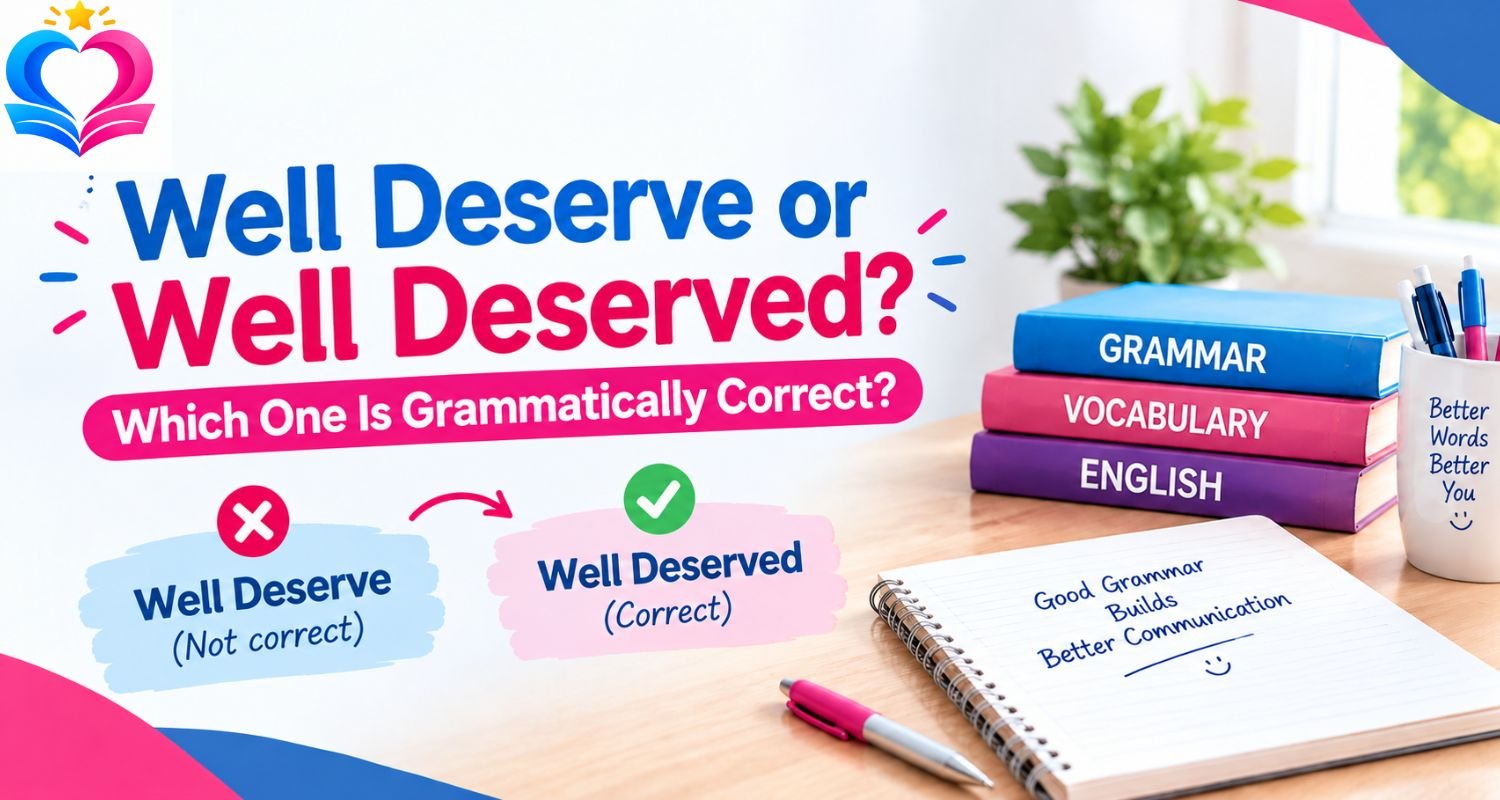
Well Deserve or Well Deserved: Which One Is Grammatically Correct?
You might think that “well deserve” and “well deserved” are simply different ways to say the same thing, but they actually represent distinct grammatical concepts. The term “deserve” functions as a verb, indicating that someone merits something, as in “You deserve the award.” On the other hand, “well deserved” serves as an adjective phrase, highlighting that something was rightfully earned, like in the phrase, “The award is well deserved.”
Understanding the Confusion: Well Deserve or Well Deserved?
“Deserve” is a verb that means to be worthy of something, capturing the essence of earning praise or reward. The phrases “well deserved” and “well-deserved” offer slightly different uses; “well deserved” is an adjective phrase that describes something that has been rightfully earned, while “well-deserved” should be hyphenated when it appears directly before a noun, enhancing clarity and ensuring proper grammatical structure.
The Correct Phrase: Well Deserved

“Well deserved” is the correct phrase when used after a linking verb or as a complement in a sentence. For instance, you might say, “The victory was well deserved,” where it serves to describe how the victory is perceived.
The phrase conveys that the outcome was justified and earned. On the other hand, “well-deserved” is hyphenated when it comes directly before a noun, as in “a well-deserved break.” Here, it functions as a compound adjective, modifying the noun to emphasize the merit of the break.
Well Deserved: Meaning and Usage
The term “well deserved” captures the essence of something that is rightfully earned or justified, conveying a sense of fairness and recognition. It often relates to achievements, rewards, or good fortune that have resulted from someone’s hard work, dedication, or resilience. For instance, saying “The promotion was well deserved” highlights that the individual had truly earned that advancement based on their efforts and contributions.
Examples of Using Well-Deserved in a Sentence
- She finally received a well-deserved promotion after years of hard work.
- The team enjoyed a well-deserved victory at the end of the season.
- Take a well-deserved break and recharge your energy.
- His success is well deserved, given his dedication.
- The actor earned well-deserved praise for the powerful performance.
- After months of training, her medal was well deserved.
- They celebrated their well-deserved achievement together.
- The teacher gained well-deserved respect from her students.
- His reputation as a leader is well deserved.
- The vacation felt truly well deserved after a stressful year.
Is Well Deserved Ever Correct?
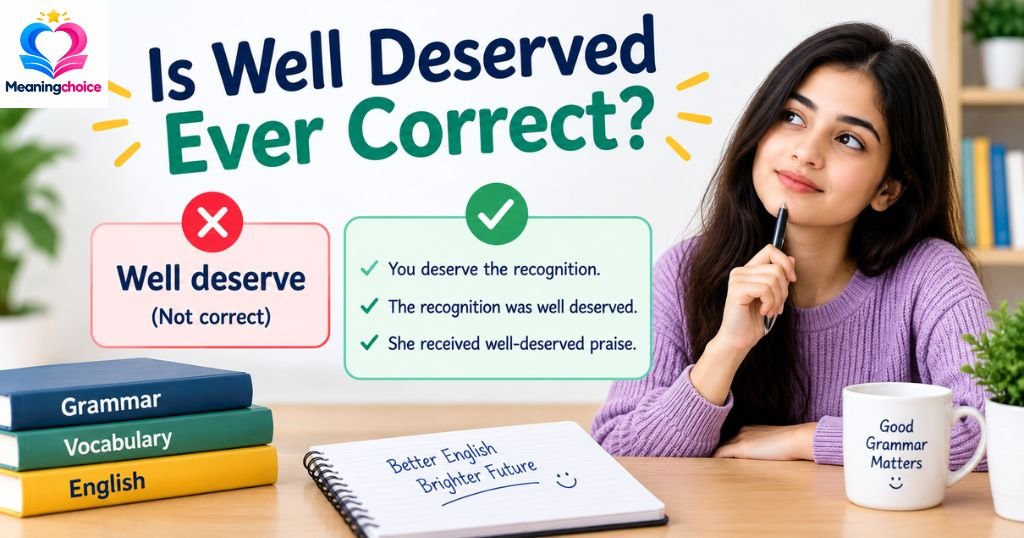
“Well deserve” is not standard English when expressing that someone is worthy of something. The phrase simply doesn’t fit the grammatical rules of modern English. Instead, you can use more natural forms like “You deserve the recognition,” “The recognition was well deserved,” and “She received well-deserved recognition.”
Well Deserved as an Adjective Phrase
The phrase “well-deserved” serves as a compound adjective, used before a noun to emphasize that something has been rightfully earned or merited. Its structure combines “well,” meaning rightly or justly, with “deserved,” which indicates that a person or thing has earned something valuable.
For instance, we often hear about “well-deserved praise,” acknowledging someone’s efforts or achievements. Similarly, a “well-deserved promotion” highlights how hard work has justly earned someone a higher position. “Well-deserved recognition” points out the acknowledgment given to individuals who have significantly contributed in their fields.
Well Deserved vs Well Deserve in Spoken English
In spoken English, “well deserved” and “well-deserved” serve distinct roles, enhancing clarity in communication. “Well deserved” follows a linking verb, indicating that the praise or recognition given is justified.
when someone says, “That praise was well deserved,” it emphasizes that the recognition truly fits the individual’s actions. Meanwhile, “well-deserved” is an adjective, smoothly placed before a noun, as in “You earned a well-deserved break,” highlighting the significance of that break as something earned.
Why Native Speakers Prefer Well-Deserved
Using “well-deserved” versus “well deserved” is about placement and grammatical structure. “Well deserved” fits with linking verbs like “is” and “was” to express a quality that has been rightfully earned.”The praise was well deserved” clearly conveys that the recognition was truly merited.
How to Remember the Difference Easily
To easily remember the difference between “deserve,” “well deserved,” and “well-deserved,” think about their positions in a sentence. “Deserve” is a verb that expresses entitlement, as in “They deserve the reward.” This straightforward action conveys what someone is worthy of.
In contrast, “well deserved” follows a linking verb to describe something that has been earned; for instance, “The reward was well deserved” indicates recognition after the fact. Finally, “well-deserved” used before a noun emphasizes the merit of something specific, like in “They received a well-deserved reward,” highlighting the acknowledgment directly related to the noun.
Common Mistakes To Avoid
Many people often slip up by using “well deserve” as an adjective before a noun. The correct term is “well-deserved,” as in “a well-deserved award.” This subtle distinction matters because using “well deserve” incorrectly can confuse readers or listeners. Instead of saying, “The award was well deserve,” the accurate phrasing is “The award was well deserved.”
Final Thought
It’s important to recognize that everyone deserves acknowledgment for their efforts. You deserve recognition for your hard work,it’s in your job or personal projects. The award was well deserved, reflecting the time and energy you’ve invested. Taking a moment to celebrate achievements can lead to greater motivation and satisfaction. So don’t hesitate to give yourself a well-deserved break; you have earned it.